Introduction
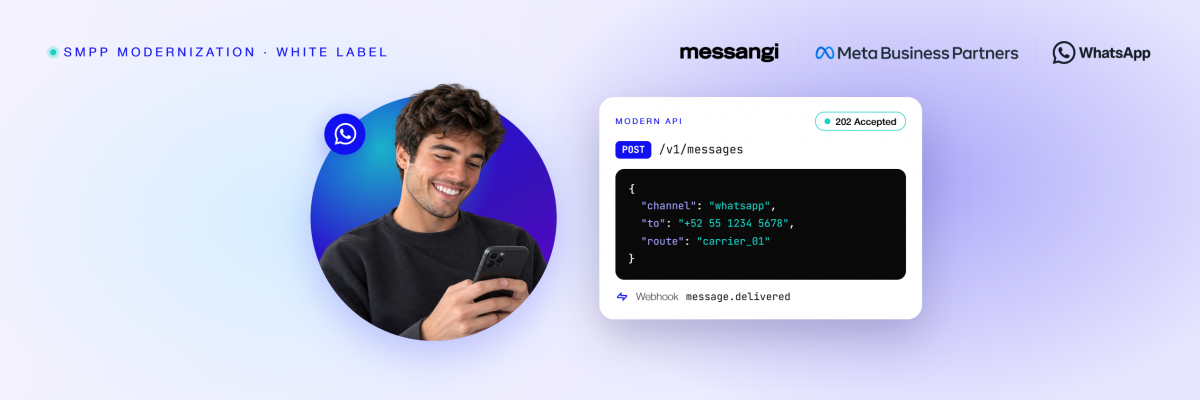
SMPP modernization adds modern APIs, a user interface, and multichannel messaging on top of existing routes.
Legacy SMPP still moves enormous SMS volume, but it is hard for enterprises to consume.
The goal is to keep routes, customers, and margins while meeting new enterprise expectations.
This guide explains how aggregators and operators can modernize without a rip-and-replace.
Key Takeaways
- SMPP modernization adds APIs, UI, and multichannel messaging on top of existing SMS routes.
- A route-preserving approach avoids rip-and-replace, so aggregators keep customers and margins during migration.
- White-label delivery lets partners keep their brand, their pricing, and their customer relationship.
- Modern APIs and WhatsApp support help partners defend accounts against global CPaaS vendors.
What is SMPP, and why does it need modernizing?
SMPP is the long-standing protocol for sending SMS at scale, and it still carries huge volume. It works well as network infrastructure. However, it fits less well as an enterprise product. Enterprises now expect REST APIs, a UI, and multichannel, which raw SMPP does not provide. Aggregators and operators built these connections for carrier traffic, not for product teams that expect dashboards and documentation.
- Bind-heavy: a dedicated bind per enterprise is hard to provision and does not scale cleanly.
- SMS-only: SMPP moves text, while buyers increasingly want WhatsApp, RCS, and email too.
- Little self-service: enterprises want dashboards and APIs, not manual onboarding.
- Still valuable: the routes and carrier relationships behind SMPP remain a real asset.
What does “without losing routes” actually mean?
Modernization often sounds like replacing everything, which feels risky to a working business. A route-preserving path keeps existing SMPP connections and carrier relationships in place. New APIs and UI sit on top, so traffic and margins are protected during the change. Route ownership matters because routes carry carrier relationships and negotiated terms that took years to build.
- Coexistence: modern APIs run alongside existing SMPP workflows, not instead of them.
- No rip-and-replace: current routes and binds keep working while new access is added.
- Protected margins: route ownership stays with the aggregator or operator.
- Gradual migration: SMPP workflows keep running, so enterprises can adopt modern access without a forced cutover.
What do enterprise buyers expect today?
Enterprise expectations have moved well beyond SMS-only access. Buyers want conversational channels, self-service, and clear reporting. These needs are easiest to meet when one stack supplies them together. WhatsApp is widely used across Latin America. Procurement teams can also compare providers on documentation, sandbox access, and reporting, not only on price per message.
- Modern APIs: REST endpoints and webhooks, not only SMPP binds.
- Self-service UI: onboarding, campaigns, and reporting without manual steps.
- Multichannel: SMS plus WhatsApp, RCS, and email in one stack.
- Compliance help: support with WABA onboarding and template submission.
How does a white-label platform fit an aggregator or operator?
A white-label platform lets a partner offer a branded product without building it. The partner keeps the brand, the pricing, and the customer, while the infrastructure runs underneath. The platform’s structure separates each partner and customer cleanly. The white-label messaging overview explains the model in more detail.
How the platform is organized
- Environments: separate operations by country, region, or partner.
- Workspaces: give each enterprise customer an isolated account.
- Branded APIs and UI: the partner’s brand appears, not the provider’s.
- Admin Console: configure channels, routing, branding, and reporting centrally.
What are the steps to modernize without disruption?
A staged rollout reduces risk, especially when live traffic is involved. Each step adds capability while the existing routes keep running.
A route-preserving rollout, step by step
- Connect: integrate the platform with existing SMPP routes and binds.
- Layer APIs: expose modern REST APIs and webhooks over the same routes.
- Add UI: give customers self-service onboarding, campaigns, and reporting.
- Expand channels: add WhatsApp, RCS, and email alongside SMS.
- Migrate in stages: move enterprises to modern access while SMPP workflows keep running.
How does modernization help defend accounts?
Global CPaaS vendors target enterprise accounts with self-service and WhatsApp, often reaching buyers directly. An aggregator that only offers SMPP is exposed, because buyers can be approached one by one. Modern APIs, a UI, and multichannel, therefore, help close that gap and protect the base. A branded portal also keeps the customer relationship with the partner, not with a third party.
- Modern expectations: REST APIs, self-service, and WhatsApp address what enterprise buyers now ask for.
- WhatsApp support: WABA onboarding and template submission help keep buyers in the platform.
- Stickier accounts: multichannel and self-service can raise switching costs.
- Retained routes: the partner keeps the connectivity and carrier relationships it already has.
What business outcomes and pricing changes can partners expect?
Modernization is a commercial move, not only a technical one. Each partner sets its own commercial terms, so outcomes vary by market. It can lower onboarding friction, open cross-channel upsell, and protect recurring revenue. SMS-only pricing competes on route margin alone, while a platform adds recurring value. Because the partner keeps its pricing, it can add platform fees alongside SMS volume.
- Faster onboarding: self-service can reduce manual provisioning.
- Cross-channel upsell: SMS customers can adopt WhatsApp and more.
- Retention: a modern product can be harder to leave.
- Route margin: SMS volume remains a core part of the model.
- Platform value: APIs, UI, and multichannel can justify recurring fees.
- Steadier revenue: recurring platform fees can smooth volume swings.
What migration risks should partners plan for?
Every migration carries risk, so a clear plan protects revenue and relationships. The main risks are delivery gaps, customer confusion, and rushed timelines. A route-preserving approach, with staged steps, helps keep each risk contained. A phased plan also gives the partner time to adjust before the next stage. Clear communication throughout keeps enterprise customers informed.
- Delivery continuity: existing routes stay in place, so current traffic keeps using them during migration.
- Customer clarity: enterprises get notice and support during the change.
- Realistic timeline: staged migration avoids a risky all-at-once switch.
- Coexistence: modern access can be adopted without abandoning SMPP.
- Guided onboarding: an experienced provider supports partners through the migration.
How does Messangi enable route-preserving modernization?
Messangi runs the multichannel Communications Platform that partners build their offer on. Its white-label APIs and UI coexist with existing SMPP routes, so connectivity stays in place. The partner keeps the brand, the pricing, and the customer, while Messangi runs the infrastructure.
- Route-preserving: modern access sits on top of existing SMPP, with no rip-and-replace.
- White-label: Environments and Workspaces separate partners and customers under the partner’s brand.
- Multichannel: SMS, WhatsApp, RCS, and email in one platform.
- WhatsApp guidance: Messangi holds official WhatsApp for Business Technical accreditation as a Select Business Partner.
More than 300 companies send messages through Messangi. The company brings direct operations in Colombia and Venezuela and more than two decades in the region.
Frequently Asked Questions (FAQs)
Does SMPP modernization mean replacing my current routes?
No, a route-preserving approach keeps existing SMPP routes while adding modern access.
Can my business keep its own brand with a white-label platform?
Yes, the partner keeps the brand, the pricing, and the customer relationship throughout.
How does modernization add WhatsApp to an SMS business?
The platform adds WhatsApp, RCS, and email alongside existing SMS routes in one stack.
Will my enterprise customers need to migrate all at once?
No, existing SMPP workflows keep running, so enterprises can adopt modern APIs and UI as they are ready.
How does this help against global CPaaS vendors?
Modern APIs, self-service, and WhatsApp help close the feature gap and protect accounts.
Conclusion
SMPP still carries critical SMS volume, but enterprises now expect more.
SMPP modernization adds APIs, UI, and multichannel while keeping routes with the partner.
Messangi provides the white-label platform that runs on top of existing connectivity.
Partners keep the brand, the customer, and the routes, and add the capabilities buyers ask for.