Introduction
Meta is updating WhatsApp Business Pricing for service messages.
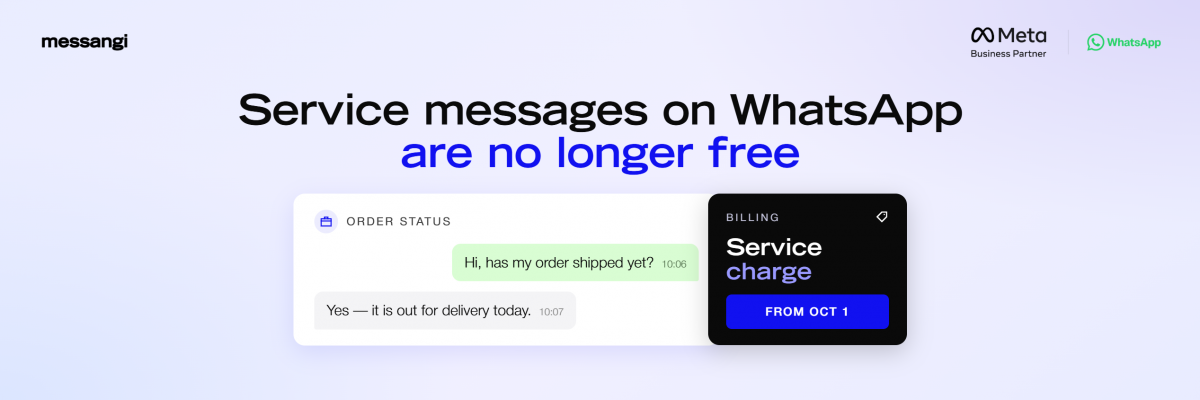
From October 1, 2026, service messages cost the same as utility and authentication.
The change affects enterprises messaging customers across Latin America and the Caribbean.
Planning early helps teams adjust budgets and protect customer conversations.
Key Takeaways
- From October 1, 2026, Meta charges service messages at utility and authentication rates.
- Conversations from Click to WhatsApp ads or Meta Business Agent avoid the service charge.
- Per-message billing means one conversation can carry several separate charges.
- Messangi helps enterprises across the region manage WhatsApp Business Pricing at scale.
What Changes on October 1, 2026
Service messages are the free-form replies a business sends to a user. These replies happen inside the 24-hour customer service window. Meta delivered service messages free since late 2024. From October 1, 2026, Meta charges for them on a per-message basis. Each service message costs the same as a utility or authentication message. In-window utility templates also lose their free status on that date. Until now, utility templates inside an open window carried no Meta charge. From October, those in-window utility messages become billable too. Marketing rates also change across several selected markets. Meta frames the update as aligning WhatsApp with industry standards. The change also reflects the business value of ongoing customer conversations. Rates still vary by market, following Meta’s published rate cards. Teams should map which conversations rely on service messages today. This step helps estimate the new spend before October arrives. Enterprises should treat the update as a budgeting milestone.
- October 1, 2026: service messages and in-window utility templates become chargeable.
- October 1, 2026: the free monthly tier of 1,000 service messages begins.
When Messages Stay Free
Some messages still avoid Meta’s charge under the new structure. Three paths keep messages free for a business.
- First 1,000 service messages: each phone number receives 1,000 free service messages every month.
- Click to WhatsApp ads: a conversation from these ads opens a 72-hour free window.
- Meta Business Agent: a conversation handled by the agent avoids the service charge.
In the ad model, the cost sits with the ad in Meta Ads Manager. In the agent model, the cost sits with the agent’s usage tokens. So the service charge disappears, but another cost takes its place. Meta Business Agent bills on tokens, at about 4 to 5 US cents per message. That token rate applies globally, regardless of the destination market. Meta uses these free paths to encourage adoption of its ads and AI products. Therefore, the design rewards businesses that lean into Meta’s own tools. Free service messages refresh each month and do not roll over. Messages that users send to a business still carry no Meta charge. Each company should weigh those tool costs against the service savings.
One Conversation Can Carry Several Charges
Per-message billing changes how a single conversation adds up. One conversation can now include several separately charged messages. As a result, businesses should optimize how many messages they send per conversation. Fewer, well-timed messages keep service costs predictable and controlled. Clear templates and tight conversation flows help teams avoid unnecessary charges. High-volume senders feel this impact most across millions of monthly conversations. A short, focused reply often serves the customer and the budget better. Therefore, message design becomes a direct lever on total cost.
How WhatsApp Business Pricing Works
Meta prices template messages using three main categories. Each category serves a distinct purpose and carries its own rate. Marketing drives demand, while utility and authentication support daily operations.
- Marketing: promotional messages, such as offers, launches, and re-engagement campaigns.
- Utility: transactional updates, like order confirmations, receipts, and account alerts.
- Authentication: one-time passcodes and login verification messages.
Service messages now join these as a charged message type. Rates depend on the category, the destination country, and monthly sending volume. Higher monthly volume qualifies businesses for lower utility and authentication rates. Meta counts these messages across every account in a business portfolio. Volume tiers reset at the start of each month. Meta also updates pricing only on the first day of each quarter. Rate card updates arrive with at least one month of notice. That schedule gives finance and operations teams time to prepare.
Country Rates in Latin America and the Caribbean
WhatsApp Business Pricing depends on the recipient’s country calling code. The applicable rate follows the recipient’s market, not the sender’s location. Some countries have standalone rates, while others fall into regional groups. Standalone markets include Colombia, Mexico, Brazil, and Argentina, among others. Grouped regions include Rest of Latin America and Rest of Africa. Venezuela, for example, maps to the Rest of Latin America rate. Meta added new billing currencies for the region during 2026. These include Colombian pesos, Argentine pesos, Chilean pesos, and Peruvian soles. Local-currency billing helps businesses manage costs amid exchange-rate movement. From October 1, 2026, more markets move to their own standalone rates. Colombia earlier saw higher utility and authentication rates in late 2025. Caribbean markets map to regional rates based on their calling codes. Each business should review the rate card for its target markets.
How Messangi Helps Enterprises Manage the Change
Messangi holds WhatsApp for Business Technical accreditation as Select Business Partners. This accreditation gives client companies full access to the WhatsApp Business channel. The platform supports SMS, WhatsApp, RCS, and email from one place. Meta’s rates are only one part of the total messaging cost. A capable platform adds tracking, templates, and support that protect spend. Messangi reporting follows delivery and usage across every active channel. That visibility helps banking, retail, and telecommunications teams plan for October. The team also helps map conversations that rely on service messages. Consolidating channels on one platform simplifies tracking and reporting. That preparation reduces surprises when the new rates take effect. With the right partner, WhatsApp Business Pricing stays a predictable line item. Book a demo to see the platform in action.
Frequently Asked Questions (FAQs)
What changes in WhatsApp Business Pricing on October 1, 2026?
Meta starts charging service messages at utility and authentication rates by market.
Which conversations stay free after the change?
Those from Click to WhatsApp ads or Meta Business Agent avoid the service charge.
How many free service messages does my business get?
Every phone number receives 1,000 free service messages each month, refreshed monthly.
Why is Meta introducing this change?
Meta aligns WhatsApp with industry standards and rewards adoption of its ads and agent.
Does WhatsApp Business Pricing still vary by country?
Yes, rates depend on the recipient’s market and its assigned regional rate.
Conclusion
From October 1, 2026, WhatsApp Business Pricing charges service messages like utility and authentication.
Conversations from ads or Meta Business Agent stay free of the service charge.
Messangi helps enterprises across the region manage this change as Select Business Partners.
Early planning keeps WhatsApp a reliable, cost-effective channel through the transition.